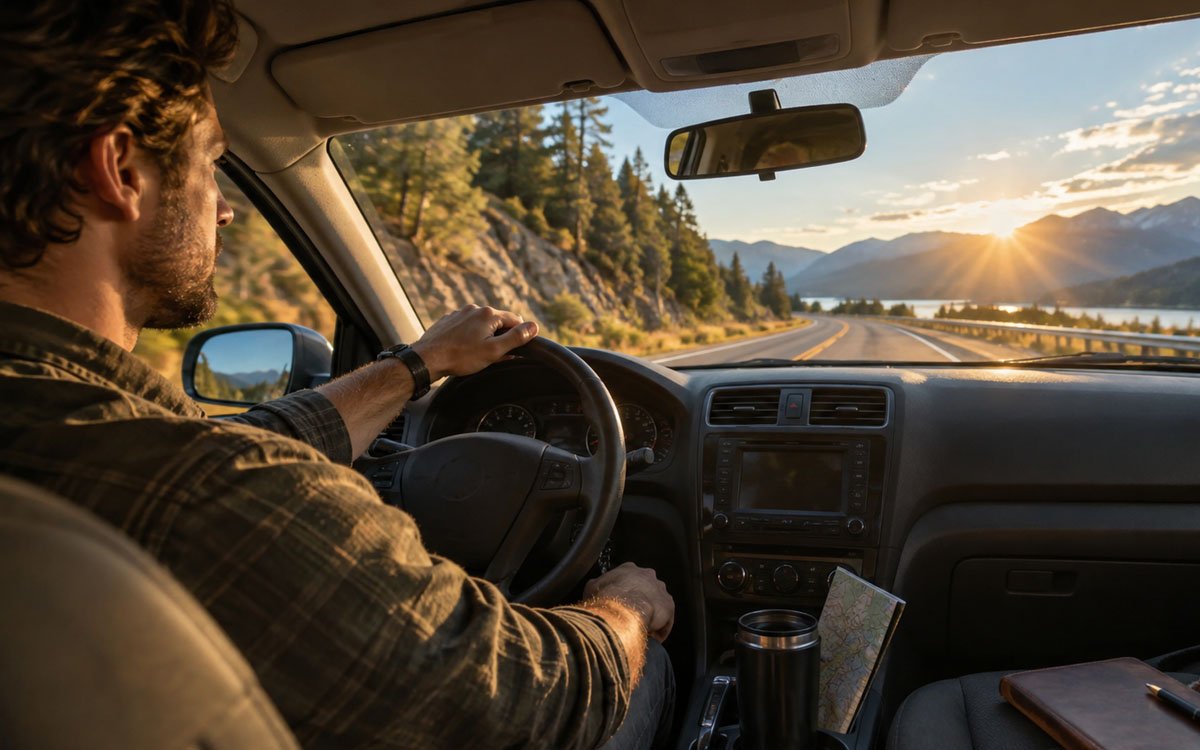
Creative block is a familiar feeling for anyone who works in an artistic or digital field. Staring at a glowing monitor or an empty canvas can quickly become an overwhelming experience, leading to frustration and stagnation. Recent data highlights just how serious this issue has become in Australia. According to the 2024 Mentally Healthy Survey, a massive 70 percent of professionals in the media, marketing, and creative sectors experienced burnout within the past year. Furthermore, a 2024 global wellbeing report identified Australia as having a remarkably high number of burnout zones among surveyed nations. When your brain is exhausted from constant decision fatigue, relentless email notifications, and impending deadlines, sitting at your desk and trying to force a breakthrough simply does not work. Sometimes, the most effective way to cure a creative rut is to grab your keys, change your physical environment, and hit the open road.
Finding Freedom on Your Own Terms
Of course, enjoying the psychological benefits of a restorative drive requires reliable access to a vehicle. For many modern creatives, digital nomads, and freelance artists, traditional car loans can be restrictive and financially stressful. The gig economy often comes with fluctuating or unpredictable incomes, making long-term, rigid bank contracts difficult to secure. This lack of mobility can trap individuals in urban burnout zones, leaving them completely unable to escape to fresh environments.
This is where flexible vehicle ownership models become highly valuable for creative professionals. Rent-to-own options allow independent workers to bypass traditional credit checks and build equity in a car on a week-to-week basis. If you want to seek out inspiring new landscapes without the burden of rigid financial commitments, looking into reliable providers like Certified Autos can be a smart move. Their flexible agreements typically bundle vehicle registration, compulsory third-party insurance, and ongoing maintenance into a single predictable payment. This model dramatically reduces the cognitive and financial stress placed on freelance creatives, granting them the physical mobility needed to reset their minds.
The Science of Windshield Time and Creativity
Occupational researchers often refer to the solitary, uninterrupted hours spent driving as windshield time. This period is viewed as a vital cognitive resource for recovering from mental exhaustion and generating unplanned ideas. When you are cruising down a highway, the physical act of driving occupies just enough of your attention to keep you focused on the road safely, but it leaves the rest of your brain free to roam. This state of unstructured thought activates the brain’s default mode network, which is incredibly powerful for problem-solving and artistic growth. Without the immediate pressure to produce results, your subconscious is given the rare opportunity to sift through complex problems and identify unique solutions.
In fact, an insightful article published by the American Psychological Association highlights how activities allowing the mind to wander help forge connections between brain networks that typically operate independently. Cognitive neuroscientists note that purposeful daydreaming allows distinct neural pathways to form stronger connections. Interestingly, research indicates that roughly 20 percent of a person’s most important creative ideas occur during these periods of mind wandering, rather than when they are actively trying to solve a specific task.
How to Turn a Drive Into a Creative Reset
Getting behind the wheel offers a profound sense of geographic autonomy. Consumer behaviour research indicates that over 60 percent of motorists report driving simply for the mental escape and fun it provides. To make the most of your next trip, consider a few practical strategies to encourage neuroplasticity and creative thinking.
- Keep the speed moderate: Research into the psychology of motoring shows that cruising at moderate, steady speeds provides a unique therapeutic space that stimulates daydreaming far better than high-speed, high-stress city driving.
- Turn off the background noise: While podcasts and audiobooks are highly entertaining, they occupy the auditory and language processing centres of your brain. Enjoying absolute quiet allows your internal monologue to wander freely, which often leads to unexpected breakthrough moments.
- Change your physical environment: Taking a brand new, unfamiliar route actively regulates emotional balance. A field study demonstrated that commuting through new scenery serves as a transitional buffer to safely decompress from stressful home or office environments.
- Seek out mindfulness: Pairing a mindful approach with a scenic solo drive is a proven way to rest your brain and foster new ideas without the pressure of a specific destination.
Whether you are dealing with a severe case of burnout or simply need a fresh perspective on a complex project, stepping away from your usual workspace is absolutely essential for long-term career sustainability. Exploring new methods of finding inspiration often requires a deliberate shift in routine and a willingness to step outside your comfort zone. The open road is much more than just a way to get from point A to point B. It is a vital transitional space where the mind can safely wander, connect disparate ideas, and ultimately spark the creative energy you need to thrive in your chosen field. So next time you hit a wall, turn off your screens, start the engine, and see where the drive takes you.