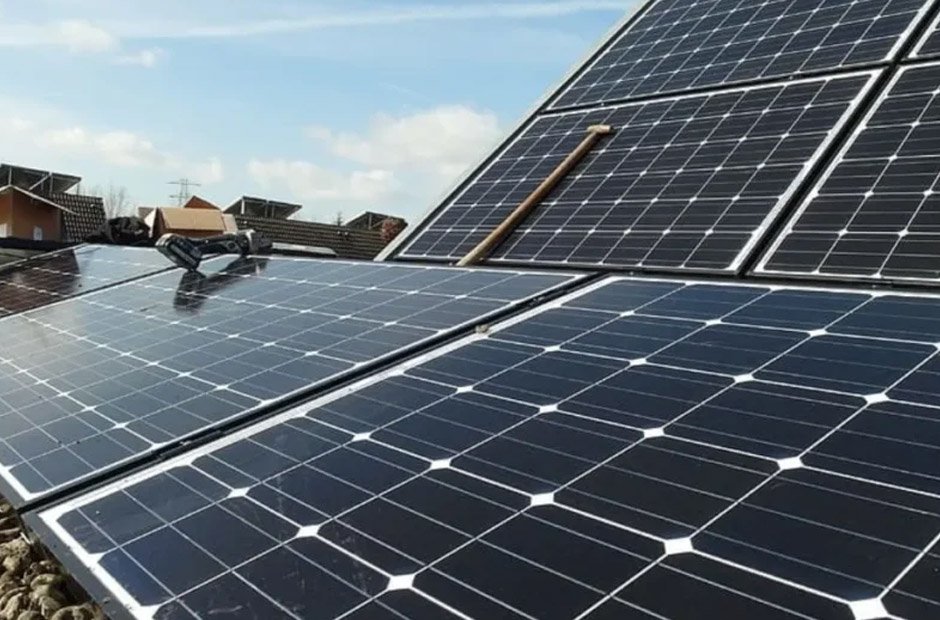
Solar panels are becoming an increasingly common sight on rooftops around the world. As the push for renewable energy grows, more homeowners and businesses are turning to the sun to power their lives. This shift not only helps the environment but can also lead to significant savings on electricity bills.
How Do Solar Panels Work?
Before comparing panel types, it’s helpful to understand the basic process that allows them to generate electricity. This process is known as the photovoltaic (PV) effect.
At its core, a solar panel is made up of smaller units called photovoltaic cells. These cells are typically made from semiconductor materials, most commonly silicon. Here’s a step-by-step breakdown of how they work:
- Sunlight Hits the Panel: When sunlight shines on a solar panel, it bombards the PV cells with tiny packets of energy called photons.
- Electrons Are Knocked Loose: As these photons strike the silicon atoms in the cell, they transfer their energy, knocking electrons loose from the atoms.
- An Electric Field Directs the Flow: An electric field is built into the structure of the PV cell. This field acts like a slide, forcing the loose electrons to flow in one direction. This flow of electrons is what we know as an electric current.
- Electricity is Generated: Metal contacts on the top and bottom of the cell collect this current. From there, the electricity flows out of the panel and can be used to power your home or be sent back to the electrical grid.
All solar panels use this fundamental principle, but the way their cells are manufactured leads to different levels of efficiency, cost, and appearance.
Monocrystalline Solar Panels
Monocrystalline panels are often considered the premium option in the solar market. They are easily recognizable by their uniform black color and rounded edges.
Construction and Efficiency
To create a monocrystalline panel, manufacturers start with a single, highly pure silicon crystal. This crystal is grown into a large cylindrical ingot, which is then sliced into thin wafers. Because the entire wafer is made from one continuous crystal, electrons have more room to move, which makes the panel highly efficient.
Monocrystalline panels typically have efficiency ratings between 17% and 22%, making them the most efficient type widely available today. This means they can generate more electricity from a smaller surface area compared to other types.
Advantages
- High Efficiency: Their superior efficiency makes them ideal for homes with limited roof space.
- Long Lifespan: These panels are very durable and often come with warranties of 25 years or more.
- Better Performance in Heat: While all solar panels lose some efficiency in high temperatures, monocrystalline panels tend to perform slightly better than their polycrystalline counterparts.
Disadvantages
- Higher Cost: The manufacturing process is complex and energy-intensive, which makes these panels the most expensive option.
- More Waste: Slicing a cylindrical ingot into square or rectangular wafers results in some wasted silicon.
Polycrystalline Solar Panels
Polycrystalline panels, also known as multicrystalline panels, are another popular choice for residential installations. You can identify them by their blue, marbled appearance and square shape.
Construction and Efficiency
Instead of using a single silicon crystal, polycrystalline panels are made by melting multiple silicon fragments together and pouring them into a square mold. As the silicon cools and solidifies, it forms multiple crystals within the wafer.
This simpler manufacturing process makes them less expensive to produce. However, the boundaries between the different crystals restrict the flow of electrons, resulting in lower efficiency. Polycrystalline panels generally have efficiency ratings between 15% and 17%.
Advantages
- Lower Cost: They are more affordable than monocrystalline panels, offering a good balance between price and performance.
- Less Wasteful Manufacturing: The square molding process produces very little silicon waste.
Disadvantages
- Lower Efficiency: You need more panels (and thus more roof space) to generate the same amount of power as you would with monocrystalline panels.
- Lower Heat Tolerance: Their performance can degrade more significantly in hot weather compared to monocrystalline panels.
Thin-Film Solar Panels
Thin-film solar panels represent a different category of solar technology altogether. Unlike crystalline panels, they are made by depositing one or more thin layers of photovoltaic material onto a substrate, such as glass, plastic, or metal.
Construction and Types
The manufacturing process is much simpler and faster than that of crystalline silicon panels. There are a few different types of thin-film panels, named after the photovoltaic material used:
- Amorphous Silicon (a-Si): This is the same technology used in many pocket calculators. It’s flexible and uses very little silicon.
- Cadmium Telluride (CdTe): CdTe is the most common type of thin-film panel and has the lowest carbon footprint of any solar technology.
- Copper Indium Gallium Selenide (CIGS): CIGS panels have shown great potential for high efficiency and perform well in various light conditions.
Thin-film panels are generally less efficient than crystalline panels, with ratings often ranging from 10% to 13%. However, their flexibility and light weight open up a wide range of applications beyond traditional rooftops.
Advantages
- Flexibility and Light Weight: They can be applied to curved surfaces, vehicles, and even portable solar chargers.
- Good Performance in Low Light: Thin-film panels can perform better than crystalline panels on overcast days.
- Lower Cost: They have the lowest manufacturing cost of all panel types.
Disadvantages
- Low Efficiency: Their low efficiency means they require a very large amount of space, making them impractical for most residential rooftops.
- Shorter Lifespan: They tend to degrade faster than crystalline silicon panels and often come with shorter warranties.
What to Consider When Choosing Solar Panels
Selecting the right type of solar panel depends on your specific situation. Here are the main factors to weigh:
- Efficiency: If you have limited roof space, a high-efficiency panel like a monocrystalline one will allow you to generate the most power possible. If space is not an issue, a less efficient but more affordable option might be suitable.
- Cost: Your budget is a major consideration. Polycrystalline panels offer a great middle ground for homeowners who want to balance cost and performance. A qualified installer can provide quotes for different systems. If you’re looking for solar companies in Utah, for example, be sure to get multiple estimates to compare costs and equipment options.
- Climate: If you live in a very hot climate, a monocrystalline panel’s better heat tolerance could lead to higher energy production over time. In areas with frequent cloudy weather, thin-film panels might have a slight edge.
- Aesthetics: Some people prefer the sleek, uniform black look of monocrystalline panels, while others don’t mind the blue hue of polycrystalline panels.
Conclusion
Making the switch to solar energy is a significant investment, but it’s one that pays off for both your wallet and the planet. By understanding the differences between monocrystalline, polycrystalline, and thin-film solar panels, you can make an informed choice that aligns with your budget, space, and energy goals.