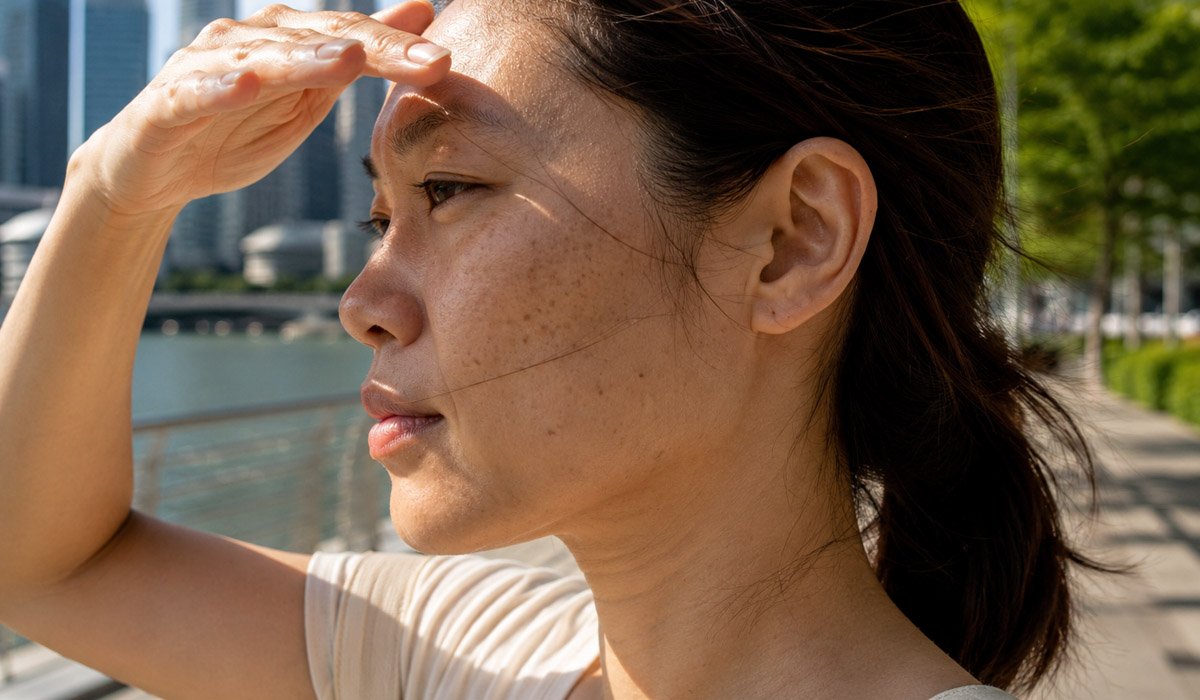
Singapore sits almost exactly on the equator, in a position no other major city on earth quite matches. This detail is not trivia. It explains why a walk to the MRT station at noon does more lasting damage to skin than an entire summer in a temperate country, and it explains why so many marks people carry on their faces refuse to fade no matter how many creams they try.
The sun here sits almost directly overhead for most of the year, so ultraviolet rays travel a shorter path through the atmosphere and hit skin at close to full strength, day after day. Add near constant humidity, and skin responds by producing pigment aggressively, as a defence mechanism. For many people, creams and gentle chemical peels cannot reach where the discolouration actually sits, which is why researching laser treatment in Singapore options becomes a sensible next step rather than a last resort, once someone understands what these treatments can and cannot do.
The Equator Changes The Rules
In London or Sydney, the sun’s angle shifts sharply with the seasons, so skin gets a break for part of the year. Singapore offers no such break. The UV index here sits in the high range for most of the year, and it does not fall much even on cloudy days, because ultraviolet light passes through cloud cover more easily than people expect.
Skin exposed to this pattern for years does not just tan and fade. It builds up pigment in layers, some close to the surface and some sitting deeper, in the dermis. Surface pigment usually responds fairly well to creams and time. Deeper pigment usually does not, because topical treatments cannot physically reach that far down.
Not Every Mark Is The Same
A useful first step is working out which kind of mark you are actually dealing with, because the causes differ and so do the fixes. Three common types show up again and again:
- Sun spots (flat, brown, usually on the cheeks and nose): sit near the surface and often respond to lighter treatments.
- Post-acne marks: caused by inflammation rather than sun, and some fade on their own within months.
- Melasma (patchy, symmetrical discolouration, often across the cheeks and forehead): driven partly by hormones and can worsen if treated the wrong way, especially with heat.
Getting this wrong is more common than people think, because all three can look similar to the naked eye. A proper assessment before treatment matters more than the treatment itself.
A Trade-off Most Guides Skip
Most articles talk about laser treatment as if it is one single thing. It is not. Ablative lasers remove a layer of skin outright and produce faster results, while non-ablative lasers work underneath the surface without breaking it, which means a longer course but a gentler recovery.
Here is the trade-off most guides leave out: skin that produces pigment more readily, which describes a large share of people living in this climate, carries a higher risk of post-inflammatory hyperpigmentation from aggressive ablative treatment. In plain terms, going in too hard can leave a new mark behind while treating the old one. For a lot of people here, the gentler, slower option is not the cautious choice. It is the one more likely to actually work.
The Slip That Undoes Months Of Work
Freshly treated skin is unusually sensitive to sunlight, sometimes for several weeks after a session. One unprotected afternoon outdoors during that window can trigger the exact pigment response the treatment was meant to fix, undoing progress that took months to build.
The other common mistake is timing. Marks left untreated for years tend to sit deeper and need more sessions to shift, while the same mark treated early often responds faster and with less intervention. Waiting for a mark to get bad enough to bother with is usually the more expensive path, not the cautious one.
What A Sensible Timeline Looks Like
Results build gradually, not overnight. Most courses involve several sessions spaced a few weeks apart, giving skin time to heal and pigment time to fade between visits, rather than one dramatic treatment. Anyone expecting a single visit to erase years of sun exposure is set up for disappointment, regardless of which clinic they choose.
A reasonable rule of thumb: judge a treatment plan by whether it includes a proper skin assessment first, a realistic session count, and clear aftercare instructions, particularly around sun protection. A plan missing any of those three is worth questioning before it is worth booking.
None of this makes a stubborn mark a mystery. It is closer to a pattern than a puzzle, shaped by geography as much as by skincare habits, once you know what to look for and where it actually sits. Understanding that pattern, rather than reaching for the nearest cream, is usually what makes the difference between a mark that fades and one that simply moves.