Key Takeaways
- Separate tasks into daily, weekly, and monthly routines.
- Give high-touch and high-traffic areas more frequent attention.
- Match products and tools to the surface and cleaning task.
- Assign every task to a person, shift, or team.
- Use safe chemical storage, training, and inspection practices.
- Adjust the plan to fit your facility, operating hours, and risks.
A workplace cleaning plan helps business owners, office managers, and facility teams protect health, safety, appearance, and day-to-day operations. Rather than relying on memory or last-minute requests, a written plan establishes clear routines for every area of the building.
For organizations comparing in-house responsibilities with outside support, commercial and residential cleaning company OCD Extreme Clean offers structured cleaning systems, walkthrough inspections, and accountability-focused service for offices, clinics, warehouses, retail spaces, and homes in Louisville, Kentucky, and surrounding communities. Their documented approach is a useful reminder that consistent results come from defined tasks, inspections, and clear ownership.
Why a Written Cleaning Plan Works Better
An informal routine often leads to uneven results. One shift may restock restrooms while another assumes someone else handled the break room, floors, or shared touch points. A written plan creates one standard for employees, supervisors, and contracted cleaning teams. It also makes supply ordering, training, and quality reviews much easier.
Step 1: Divide the Workplace Into Cleaning Zones
Start by separating the building into manageable zones instead of treating the entire property as one task. Typical zones include entrances, reception areas, workstations, meeting rooms, break rooms, restrooms, storage spaces, loading areas, and outdoor access points.
Each zone needs its own routine. Restrooms require sanitation, moisture control, and restocking. Offices need dust removal, floor care, and attention to shared equipment. A warehouse may need dust control, spill response, and safe cleaning around equipment. Listing zones first makes it easier to identify what needs attention and how often.
Step 2: Rank Areas by Traffic and Touch Points
Prioritize the places people use most often. High-touch surfaces should be cleaned regularly, while lower-use surfaces can generally be cleaned when visibly dirty. Review traffic patterns during a normal workday, including visitor activity, shift changes, meal periods, and deliveries.
- Door handles, push plates, light switches, and elevator buttons.
- Reception counters, shared desks, tables, and payment areas.
- Restroom fixtures, stall latches, dispensers, and sink handles.
- Break room appliance handles, faucets, counters, and seating.
- Shared keyboards, phones, remotes, and meeting-room controls.
Step 3: Build a Daily Cleaning Checklist
A daily checklist should cover the work that keeps the facility presentable and functional between deeper cleanings. Keep it short enough that staff can complete it consistently and detailed enough that important work is not missed.
- Remove trash and replace liners.
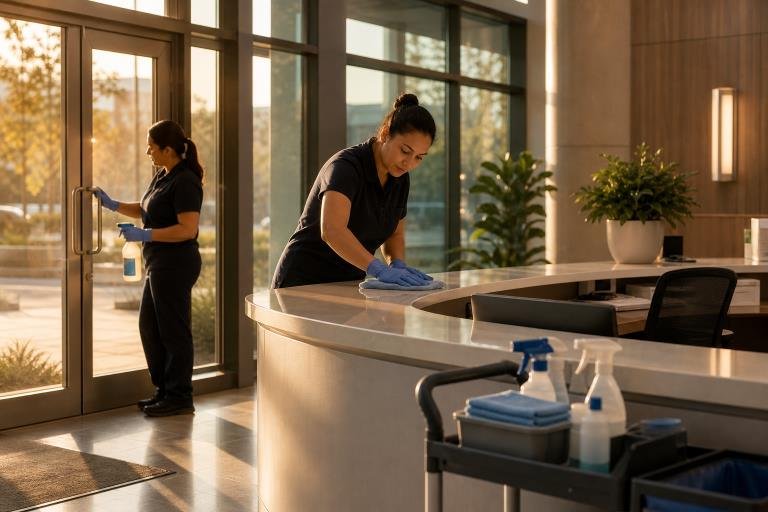
- Wipe high-touch surfaces and shared equipment.
- Clean, restock, and inspect restrooms.
- Clean break room counters, sinks, and tables.
- Vacuum, sweep, or mop floors as needed.
- Check entrances for dirt, moisture, clutter, and slip risks.
- Report leaks, damage, odors, spills, and supply shortages.
- Complete a final visual inspection of each zone.
Step 4: Add Weekly and Monthly Tasks
Daily work handles immediate needs, but it does not replace periodic detail cleaning. Weekly and monthly tasks address buildup and make routine inspections more meaningful.
Weekly Tasks
- Clean corners, baseboards, ledges, blinds, vents, and interior glass.
- Wash waste bins and organize cleaning storage areas.
- Inspect floors for stains, worn spots, and potential slip hazards.
- Dust high surfaces and clean behind easily movable items.
Monthly Tasks
- Schedule deeper floor care and upholstery or carpet treatment as needed.
- Clean behind furniture and equipment where safe to do so.
- Review restroom grout, fixtures, drainage, and recurring odor concerns.
- Inspect mops, cloths, buckets, vacuums, and brushes for wear or contamination.
- Update the checklist when inspections reveal repeated weak points.
Step 5: Use the Right Method for Each Surface
Cleaning, sanitizing, and disinfecting are related but different steps. Cleaning removes dirt and reduces germs. Sanitizing reduces germs to a level considered safer under applicable standards. Disinfecting kills remaining germs on appropriate surfaces after cleaning. In many situations, routine cleaning is enough, while disinfection is more appropriate after illness, visible contamination, or when facility rules require it.
Choose products based on the surface, soil type, and manufacturer’s instructions. Use electronics-safe methods for keyboards and touch screens, surface-safe products for finished floors and counters, and appropriate products for carpet or upholstery. If disinfecting is needed, clean first and keep the product wet for its labeled contact time.
Step 6: Add Chemical and Worker Safety Rules
A cleaning plan should protect the people completing it. Safer chemical selection practices can help teams evaluate products, reduce unnecessary exposure, and make better purchasing decisions. Chemical safety should be part of onboarding, not an afterthought.
- Keep products in original, clearly labeled containers.
- Make Safety Data Sheets available to workers.
- Use gloves, eye protection, and other required PPE.
- Provide ventilation when products create fumes.
- Never mix chemicals, even common household products.
- Train staff on spills, dilution instructions, and safe storage.
Step 7: Assign Tasks and Set Inspection Points
A checklist only works when every item has an owner. Assign tasks by employee, shift, department, or service team. Add initials, completion times, and a notes field for problems that need maintenance follow-up. Supervisors should inspect outcomes, not simply confirm that boxes were checked.
Step 8: Adjust the Plan for Your Workplace
Offices may focus on kitchens, conference rooms, shared desks, and restrooms. Retail spaces need attention at entrances, counters, fitting rooms, and customer touch points. Schools require routines for classrooms, cafeterias, playground equipment, and restrooms. Warehouses often need dust management, floor care, loading-area checks, and safe cleaning around machinery. Medical offices should follow facility-specific infection-control requirements and professional guidance.
Track Supplies and Equipment
Maintain a simple inventory with minimum stock levels for liners, paper goods, gloves, microfiber cloths, mop heads, approved cleaners, and PPE. Store clean tools separately from used tools. After use, wash, dry, and inspect mops, cloths, buckets, and brushes to reduce odors, premature wear, and cross-contamination.
Common Questions About Workplace Cleaning Plans
How Often Should a Workplace Be Cleaned?
Frequency depends on traffic, visible soil, facility type, shared surfaces, operating hours, and applicable industry requirements. High-use spaces may need attention more than once per day.
Should Every Surface Be Disinfectant Every Day?
Not necessarily. Routine cleaning may be sufficient for many areas. Use disinfection when someone has been sick, contamination is present, or your facility has specific requirements.
What Should an Inspection Cover?
Check floors, restrooms, touch points, waste removal, odors, supply levels, equipment condition, and unresolved maintenance concerns.
Final Checklist for a Better Plan
- Map the facility into clear cleaning zones.
- Prioritize high-touch and high-traffic areas.
- Create daily, weekly, and monthly task lists.
- Match products, tools, and methods to each task.
- Assign responsibility and inspect results.
- Review recurring issues and update the plan quarterly.
Conclusion
A practical workplace cleaning plan does not need to be complicated. It needs to be clear, realistic, and easy to review. When tasks are organized by zone, frequency, risk, and ownership, cleaning becomes a reliable part of operations instead of a last-minute chore.