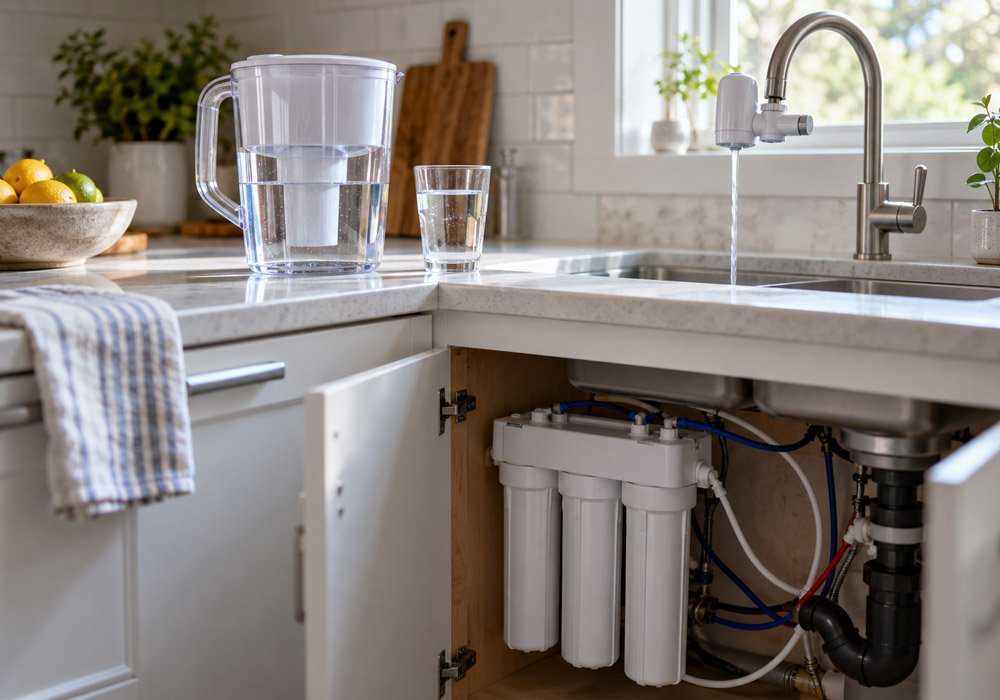
Household water quality needs vary depending on how you use water and the specific concerns in each area. A water filter system designed for kitchen use serves a different purpose from whole-home filtration. Filtration coverage, treatment stages, conditioning features, and installation requirements all influence the appropriate setup. Here is how to choose the right water filter system for your home:
Assess Water Use
Kitchen water often receives priority when filtration focuses on drinking and cooking. Under-sink systems treat water at the kitchen outlet, while countertop models offer another point-of-use option. These dedicated kitchen applications also treat water used for food preparation.
Whole-home use introduces different requirements because water reaches showers, laundry areas, appliances, and other fixtures throughout the house. Households seeking broader treatment need coverage beyond a single kitchen outlet. Shower water may also raise specific concerns, such as chlorine, certain metals, or scale, depending on the local water supply and treatment goals.
Households with several filtration priorities are able to compare single-outlet treatment with broader coverage. A kitchen setup addresses drinking and cooking water, while whole-house treatment reaches fixtures throughout the property. Shower-specific filtration provides another option when treatment needs center on bathing rather than every household outlet.
Evaluate Treatment Requirements
Whole-home treatment also affects how a household manages maintenance and installation. These systems typically require installation on the main water line and may involve periodic filter replacement, media changes, or other servicing. Because treatment occurs before water is distributed throughout the home, system capacity and flow rate are key factors to evaluate, particularly when multiple fixtures operate at the same time.
Water chemistry also influences which treatment approach is appropriate. Scale-related problems may call for conditioning rather than conventional filtration, while sediment or specific contaminants require a filter designed for that purpose. Reviewing independent filter life and replacement requirements helps determine whether a system suits the household’s actual water conditions.
Select Filtration Stages
Each stage of a water purification system targets specific contaminants through a particular treatment process. Ceramic filtration provides physical filtration of particles and microorganisms; activated carbon reduces substances such as chlorine, chloramine, pesticides, and volatile organic compounds (VOCs). When a system includes advanced resins, those media target specific dissolved contaminants based on their treatment capabilities and design. A multi-stage water filter system combines several treatment stages in one system, and each stage performs a distinct role in the overall treatment process.
Evaluate Installation Needs
Installation requirements depend on the filtration system’s location, design, and connection point within the home. Countertop models sit at the kitchen counter and provide point-of-use treatment without occupying the cabinet beneath the sink. Under-counter models install inside the cabinet below the kitchen sink and connect to a dedicated faucet or the existing plumbing. Whole-house systems connect to the main water line and treat water before it reaches household fixtures. The following installation factors help distinguish the available configurations:
- Whole-house systems treat water at the main supply point before distribution throughout the home.
- Pressure-driven operation eliminates the need for electricity in documented whole-house configurations.
- Point-of-use systems require an evaluation of cartridge capacity, replacement intervals, and available installation space.
- Installation requirements also depend on plumbing connections, available clearance, and the system’s flow-rate requirements.
Choose a Water Filter System
Tracking household water use throughout the day helps identify where treatment is most necessary. Drinking, cooking, bathing, laundry, and appliance use involve different water-quality solutions. Identifying these specific needs provides a more practical basis for selecting a treatment system than addressing general water-quality concerns alone. Talk to a professional about a water filter system that fits your household and can be installed to meet your home’s water needs.