Legal Foundations and Initiating Personal Injury Claims
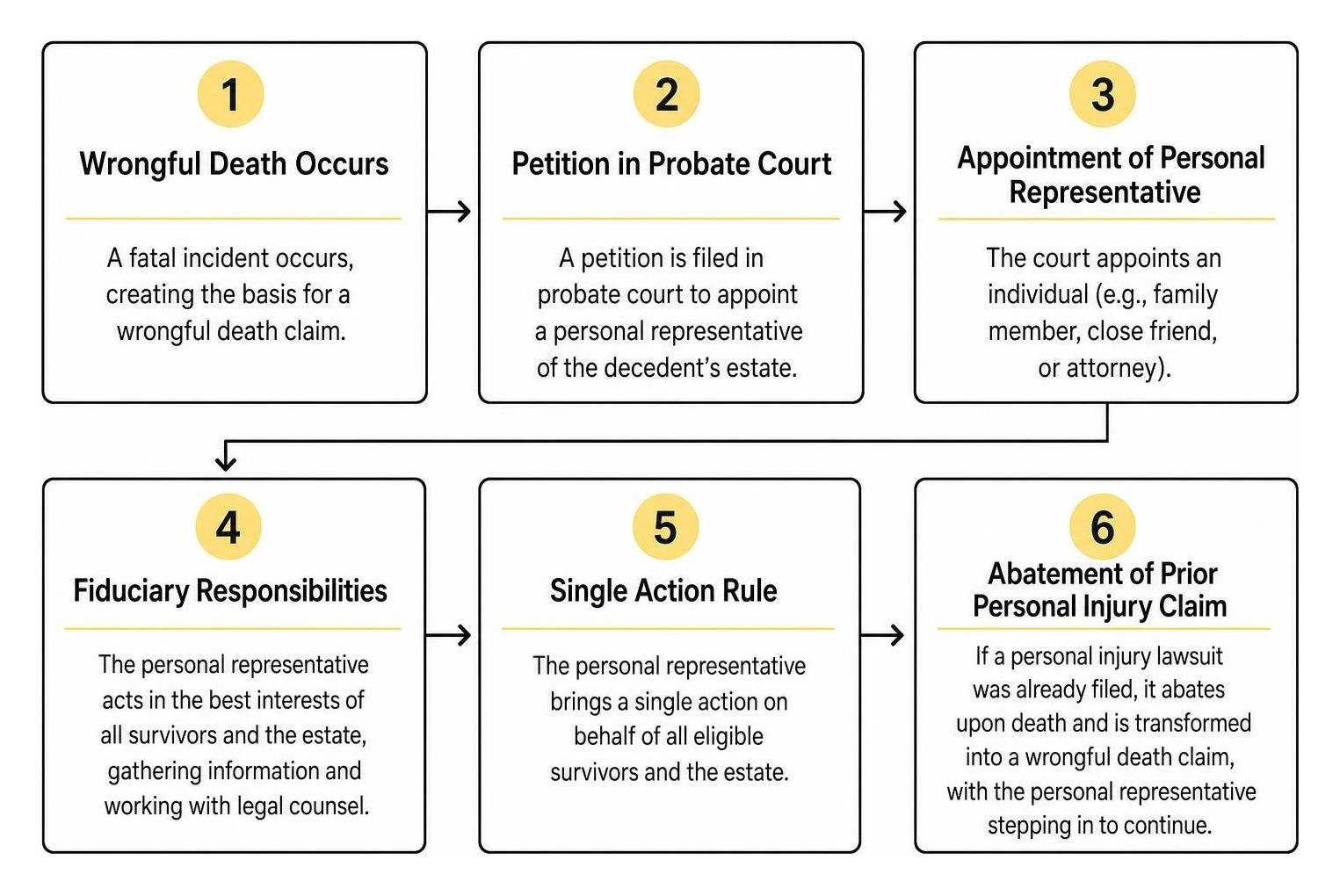
When a wrongful death occurs in Florida, the legal process is initiated not by individual family members, but by a designated individual known as the personal representative of the decedent’s estate. This is a crucial distinction under Florida Statute 768.20. This personal representative is legally mandated to bring a single action on behalf of all eligible survivors and the estate itself. This “single action rule” prevents multiple lawsuits from arising from the same death, streamlining the legal process.
The appointment of a personal representative typically occurs through the probate court system. This individual, who might be a family member, a close friend, or an attorney, has a fiduciary duty to act in the best interests of all beneficiaries. Their role is to gather information, work with legal counsel, and ultimately pursue the wrongful death claim.
It’s also important to understand Florida’s abatement rules. If a personal injury lawsuit was already underway for the deceased’s injuries before their death, that action does not survive. Instead, it “abates” and must be transformed into a wrongful death claim, with the personal representative stepping in to pursue compensation under the Florida Wrongful Death Act. This ensures that the legal action continues, but under the specific framework designed for fatal incidents.
Identifying Parties Eligible to Pursue Personal Injury Claims
Florida law is specific about who qualifies as a “survivor” in a wrongful death claim, as detailed in Florida Statute 768.18. These are the individuals for whom the personal representative seeks compensation. Generally, eligible survivors include:
- The decedent’s surviving spouse:This is often the primary claimant, seeking damages for their own losses.
- Minor children of the decedent:In Florida, a minor child is broadly defined for wrongful death purposes as anyone under the age of 25. This is a more expansive definition than the typical age of majority and allows for extended recovery for lost parental guidance and support.
- All children of the decedent if there is no surviving spouse:If the deceased was not married, all of their children, regardless of age, may be considered survivors.
- Each parent of a deceased minor child:Parents can recover for the mental pain and suffering associated with the loss of a child under 25.
- Each parent of an adult child:Parents of an adult child may recover for mental pain and suffering only if there are no other survivors (i.e., no spouse or children of the deceased adult child).
- Dependent blood relatives and adoptive siblings:Other individuals who were wholly or partly dependent on the decedent for support or services may also qualify as survivors. This can include grandparents, siblings, or other relatives who relied on the deceased.
Identifying all potential beneficiaries early in the process is critical, as they must be explicitly named in the wrongful death complaint.
Core Role of the Estate Personal Representative
The personal representative holds a pivotal position in a Florida wrongful death action. Their responsibilities extend beyond merely filing the lawsuit. They are tasked with a significant fiduciary obligation to all statutory survivors and the estate. This means they must act impartially and in the best interests of everyone entitled to recovery.
Their duties include:
- Initiating the lawsuit:The personal representative is the only party with the legal standing to file the wrongful death complaint.
- Identifying beneficiaries:They must meticulously identify and allege the relationships of all potential beneficiaries to the decedent in the complaint, ensuring no eligible survivor is overlooked.
- Claim consolidation:All claims for damages, whether for the estate or for individual survivors, are consolidated into this single lawsuit. The personal representative acts as the central figure for all negotiations and litigation.
- Managing the legal process:Working closely with legal counsel, the personal representative oversees the investigation, discovery, and potential settlement or trial of the case.
- Distributing awards:If a settlement or judgment is secured, the personal representative, with court approval, is responsible for distributing the proceeds among the eligible survivors and the estate according to Florida law.
The appointment of a personal representative through the probate court is therefore one of the earliest and most essential practical steps following a wrongful death in Florida.
Critical Deadlines, Comparative Fault, and Statutory Rules
Navigating a wrongful death claim in Florida requires strict adherence to legal timelines and an understanding of how the deceased’s own actions might impact recovery. These elements are governed by specific Florida Statutes, including Fla. Stat. 95.11 for limitations and Fla. Stat. 768.81 for comparative fault.

Two-Year Deadlines and Exceptions Governing Personal Injury Claims
The statute of limitations is a critical deadline that dictates how long you have to file a lawsuit after an incident. For most wrongful death lawsuits in Florida, this deadline is two years from the date of the decedent’s death, as stipulated by Fla. Stat. § 95.11(4)(d). Missing this deadline almost invariably means forfeiting the right to pursue a claim, regardless of the merits of the case. This is why prompt legal consultation is paramount.
However, there are notable exceptions to this two-year rule:
- Murder or Manslaughter:If the death resulted from murder or manslaughter, Florida law provides an indefinite statute of limitations. A wrongful death suit can be filed at any time, even if the accused hasn’t been arrested, charged, or convicted of the crime. This exception acknowledges the heinous nature of such acts and removes the time constraint for civil justice.
- Medical Malpractice:While generally subject to the two-year rule, medical malpractice claims often have complex pre-suit requirements, including thorough investigations and notice periods, which can effectively shorten the time available for filing the actual lawsuit.
- Tolling Mechanisms:In rare circumstances, the statute of limitations might be “tolled” or paused. This could occur if, for example, the identity of the at-fault party was unknown or actively concealed, or if the personal representative is not appointed promptly. However, these are highly fact-specific exceptions and should not be relied upon without expert legal advice.
Given the strict nature of these deadlines, we always advise families to consult with an attorney as soon as possible after a loved one’s death to ensure all legal rights are protected. For more detailed information on navigating these complex legal processes, especially concerning personal injury claims, resources like a comprehensive guide to Florida wrongful death claims can be invaluable.
Impact of Modified Comparative Negligence on Recovery
Florida’s legal landscape includes a modified comparative negligence rule, outlined in Fla. Stat. § 768.81, which significantly affects wrongful death recovery. This rule addresses situations where the deceased person may have contributed to the incident that led to their death.
Under modified comparative negligence:
- Damage Reduction:If the decedent is found to be partially at fault for their own death, the total damages awarded to the survivors and the estate will be reduced proportionally by the percentage of fault attributed to the decedent. For example, if the total damages are determined to be $1,000,000, but the decedent was found 20% at fault, the recoverable damages would be reduced to $800,000.
- 50 Percent Threshold:A critical aspect of Florida’s current rule (updated in 2023) is the 50 percent threshold. If the decedent is found to be more than 50% at fault for their own death in an ordinary negligence case, the survivors and estate are barred from recovering any damages This is a significant change from previous pure comparative negligence laws and introduces a substantial risk for cases where the decedent’s own conduct played a major role.
- Defense Strategy:This rule often forms a key defense strategy, where the at-fault party attempts to shift blame to the deceased to reduce or entirely eliminate their liability. Evidence of the deceased’s actions, such as distracted driving, failure to use safety equipment, or contributing to a dangerous situation, can be presented to argue comparative fault.
Understanding this rule is vital for evaluating the potential outcome of a wrongful death claim, as the allocation of fault can dramatically impact the final recovery amount.
Calculating Recoverable Estate and Survivor Damages
Determining the appropriate compensation in a Florida wrongful death claim involves a meticulous assessment of both economic damages and non-economic losses. This calculation considers various factors, including the decedent’s financial contributions, the emotional void left behind, and specific statutory provisions. To accurately project future losses, calculations often involve reducing future values to their present value and considering joint life expectancies of the survivor and the decedent.

Survivor Losses and Non-Economic Compensation
Survivors in a Florida wrongful death case can recover damages for their personal losses, which include both tangible and intangible harms. These often represent the most significant portion of a wrongful death award:
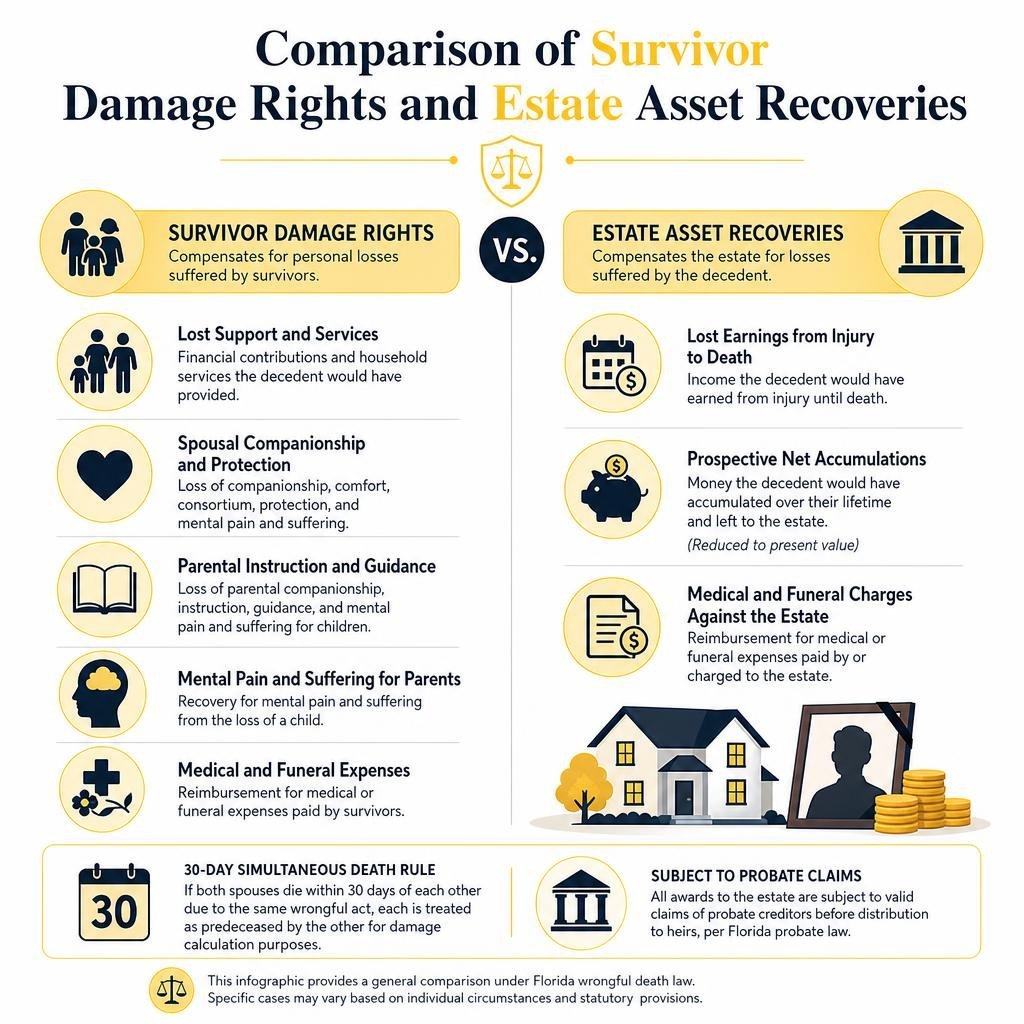
- Lost Support and Services:This category accounts for the financial contributions the deceased would have provided to their family, as well as the value of household services they would have performed (e.g., childcare, home maintenance, companionship). This is calculated from the date of injury to death, with interest, and future loss of support and services reduced to present value.
- Spousal Companionship and Protection:A surviving spouse may recover for the profound loss of the decedent’s companionship, comfort, consortium, and protection, along with mental pain and suffering from the date of injury. Evidence of remarriage of a decedent’s surviving spouse is admissible under Florida wrongful death law when evaluating damages.
- Parental Instruction and Guidance:Minor children (under 25 for these purposes) and all children if there is no surviving spouse, may recover for the lost parental companionship, instruction, and guidance they would have received, as well as for their mental pain and suffering.
- Mental Pain and Suffering for Parents:Each parent of a deceased minor child may recover for their mental pain and suffering. Parents of an adult child may recover for mental pain and suffering only if there are no other survivors (i.e., no surviving spouse or children of the deceased adult child).
- Medical and Funeral Expenses:Survivors who paid for the decedent’s medical or funeral expenses can seek reimbursement for these costs.
A unique statutory provision in Florida addresses the rare circumstance of a 30-day simultaneous death rule. If both spouses die within 30 days of one another as a result of the same wrongful act, Florida law treats each spouse as having been predeceased by the other for damage calculation purposes, particularly impacting the recovery rights of children.
Estate Losses and Prospective Net Accumulations
In addition to the damages recoverable by individual survivors, the decedent’s estate can also recover certain losses through the personal representative. These damages are intended to compensate for losses that would have benefited the estate itself:
- Lost Earnings from Injury to Death:This covers the income the decedent would have earned from the time of the injury until their death.
- Prospective Net Accumulations:This is a significant category of damages representing the amount of money the decedent would have accumulated over their lifetime and left to their estate, had they lived their full life expectancy. This can only be recovered if there is a surviving spouse or lineal descendants (children, grandchildren). It is reduced to present value.
- Medical and Funeral Charges Against the Estate:Any medical or funeral expenses that were paid by or charged directly to the estate can be recovered. This is distinct from expenses paid by individual survivors.
It’s crucial to note that all awards granted to a decedent’s estate in a wrongful death lawsuit are subject to the valid claims of probate creditors who have complied with Florida probate law requirements. This means that creditors can seek payment from the estate’s portion of the wrongful death recovery before it is distributed to heirs.
Special Exclusions, Medical Negligence, and Settlement Distribution
Florida’s wrongful death statutes include specific limitations and rules, particularly concerning medical negligence claims and the distribution of awards. These provisions can significantly impact who can recover certain types of damages and how compensation is ultimately allocated.
Limitations in Medical Malpractice Actions and the Free Death Gap
One of the most impactful statutory restrictions in Florida wrongful death law applies to cases arising from medical negligence. Florida Statute 768.21(8) imposes strict limitations on non-economic damages in these specific circumstances:
- Adult Children Restrictions:In wrongful death claims resulting from medical negligence, adult children (those 25 years or older) are explicitly prohibited from recovering damages for lost parental companionship, instruction, guidance, or mental pain and suffering.
- Parents of Adult Children:Similarly, parents of an adult child who dies due to medical negligence cannot recover for their mental pain and suffering.
These limitations create what is often referred to as the “free death gap.” This term highlights a controversial aspect of Florida law where, in certain medical malpractice cases, if the deceased is an adult with no surviving spouse or minor children, but only adult children or elderly parents, there may be no eligible survivors who can recover for mental pain and suffering. This can leave negligent medical providers without significant financial exposure for non-economic damages in these specific scenarios, leading to criticism regarding accountability. This statutory immunity is a unique and often challenging aspect of Florida’s wrongful death framework.
Distribution Rules for Settlements and Judgment Awards
Once a wrongful death settlement is reached or a judgment is awarded, the process of distribution is carefully managed under Florida law. The personal representative, with court oversight, is responsible for ensuring the funds are allocated correctly.
- Apportionment Plan:The personal representative must propose an apportionment plan to the court, detailing how the funds will be divided among the eligible survivors and the estate. This plan must adhere to the statutory categories of damages and who is entitled to them.
- Court Approval:The court reviews and must approve the apportionment plan. This ensures fairness and compliance with Florida’s Wrongful Death Act.
- Probate Creditor Priority:As mentioned, any portion of the award designated for the decedent’s estate is subject to the claims of creditors who have properly filed their claims in the probate process. The personal representative must satisfy these legitimate creditor claims before distributing the remaining estate funds to heirs.
- Beneficiary Distribution:Funds allocated to individual survivors (e.g., for lost companionship, mental pain and suffering) are typically paid directly to them and are generally not subject to the decedent’s creditors. This offers a layer of protection for survivors’ awards.
- Estate Protection:Awards intended for the estate, such as lost prospective net accumulations, are managed by the personal representative within the probate estate, subject to its rules and creditor claims, before eventual distribution to the estate’s heirs.
The distribution process underscores the importance of the personal representative’s role and the need for meticulous legal guidance to ensure that all beneficiaries receive their rightful compensation according to Florida law.
Frequently Asked Questions About Fatal Injury Recovery
We understand that the complexities of wrongful death law can be overwhelming, especially during a time of grief. Here, we address some of the most common questions families have about fatal injury recovery in Florida.
How Does Comparative Negligence Impact Recovery?
Florida’s modified comparative negligence rule, outlined in Fla. Stat. § 768.81, directly impacts the amount of compensation recoverable in a wrongful death case. If the deceased person is found to have contributed to the incident that caused their death, the total damages awarded to the survivors and the estate will be reduced by the percentage of fault attributed to the decedent. For example, if the decedent was 25% at fault, the total award would be reduced by 25%. Critically, if the decedent is found to be more than 50% at fault in an ordinary negligence case, Florida law bars any recovery whatsoever. This means that a significant portion of the defense’s strategy often revolves around proving the decedent’s comparative fault to reduce or eliminate liability.
What Is the Filing Deadline for Wrongful Death Actions in Florida?
The general filing deadline, or statute of limitations, for a wrongful death action in Florida is two years from the date of the decedent’s death, as specified in Fla. Stat. § 95.11(4)(d). This is a strict deadline, and failure to file within this period typically results in the permanent loss of the right to pursue a claim. However, there is a crucial exception: if the death resulted from murder or manslaughter, the claim can be filed at any time, regardless of whether criminal charges have been filed or convictions obtained. Due to the strict nature of these deadlines, it is imperative for the personal representative to consult with an attorney immediately after a wrongful death to ensure timely action.
Are Wrongful Death Settlement Proceeds Subject to Creditor Claims?
The answer to this question depends on who the award is intended for. Awards or settlements designated for the decedent’s estate (such as lost prospective net accumulations or medical/funeral expenses charged to the estate) are generally subject to the claims of creditors who have complied with Florida probate law requirements. This means creditors can seek payment from this portion of the recovery. However, damages awarded directly to individual survivors (e.g., for lost support, companionship, or mental pain and suffering) are typically considered personal to those survivors and are generally protected from the decedent’s creditors. This distinction highlights the importance of proper apportionment of awards by the court.
Conclusion
The journey through a Florida wrongful death claim is undoubtedly one of the most challenging legal processes a family can face. It demands not only emotional resilience but also a thorough understanding of complex statutory compliance, critical deadlines, and the nuanced duties of the personal representative. From accurately identifying all eligible survivors and meticulously calculating damages to navigating the specific limitations imposed by medical negligence laws and the impact of comparative fault, every step requires precision and expertise.
We hope this guide has provided clarity on the intricate legal landscape governing fatal injury recovery in Florida. While no legal article can replace personalized advice, understanding these foundational principles is the first step toward seeking justice and fair compensation for your profound loss. Ensuring timely filing and a comprehensive evaluation of all potential damages are paramount to achieving a just outcome.